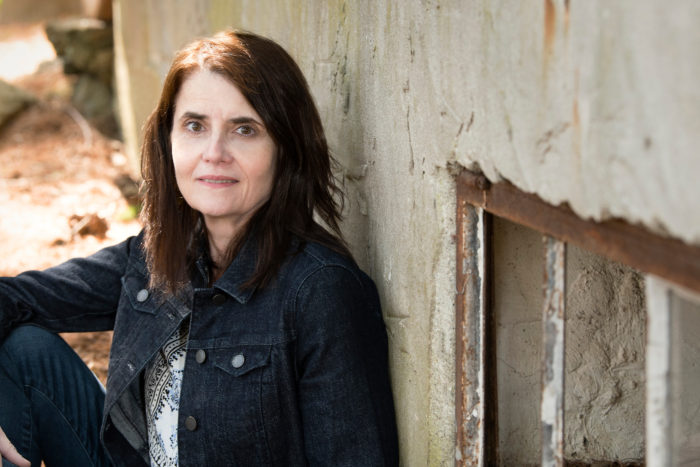
Fellow Crooked Lane author T. M. Dunn has served as Senior Director of the Writing Institute at Sarah Lawrence College, where she holds an MFA in creative writing. She coaches aspiring and established writers and teaches creative writing workshops. She is the co-host of the Westport Library’s podcast, “Go Ahead, Write Something.” This Italian-American, Bronx-raised rebel has traveled the world. She lives in Stamford, Connecticut where she is currently working on her next novel, with her rescue puppy Blanqui snuggled at her side.
I had the privilege of interviewing T. M. Dunn for a cross-promotional event involving Crooked Lane authors who all have books dropping this month. (For Jennie Marts’ interview with me, click here.)
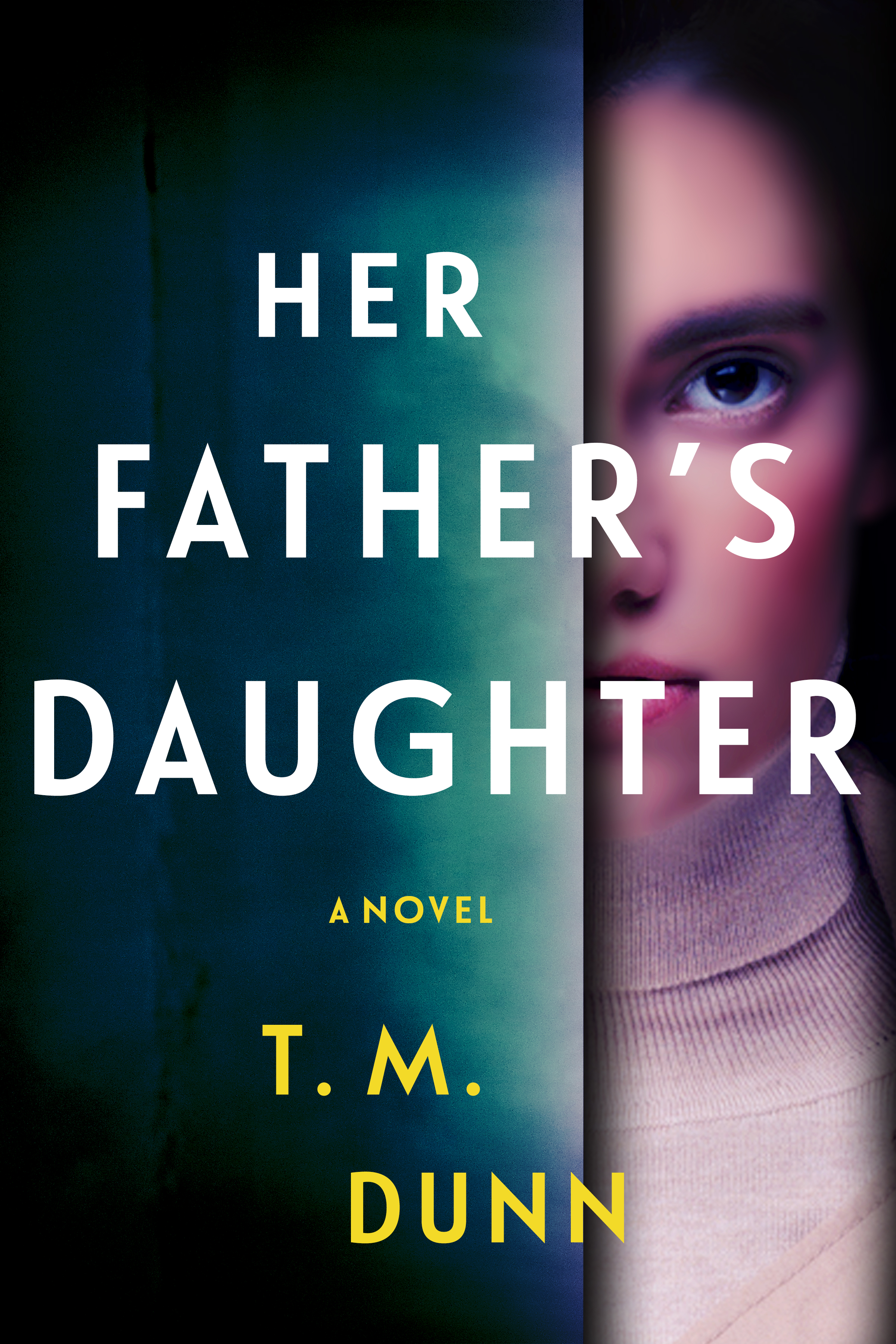
ABOUT HER FATHER’S DAUGHTER
Skillfully weaving together domestic suspense, a desperate police investigation, a love affair, and a serial killer on the loose, acclaimed author T. M. Dunn’s Her Father’s Daughter makes for a raw, edgy, and hard-hitting hero’s journey into a family’s twisted secrets, perfect for fans of Oyinkan Braithwaite and Karen Dionne.
Twenty-five-year-old Linda Donovan has spent her life working for her father, Anthony, at Donovan and Daughter Exterminators in New York City. On the anniversary of her mother’s death, her father makes his annual visit to his late wife’s grave while Linda heads to a Park Avenue apartment building to work solo.
When she arrives, she finds the body of an elderly resident, partially eaten by rats. The gruesome death not only speaks poorly of the Donovans’ exterminating services—it also points to foul play. When the cops show up, they demand to speak to Linda’s father. But despite her efforts to contact him, Anthony has gone off the radar.
As he evades a possible murder charge, Linda’s father records in five notebooks—and five damning acts—the story of how he met and fell in love with her mother, a previously untold history of familial abuse, tormented souls, and true love gone terribly wrong.
Chris Swann: What was the inspiration for your book, Her Father’s Daughter?
T. M. DUNN: The Son of Sam killed my best friend’s cousin and her boyfriend around the corner from where I lived. What became later known as the Summer of Sam was also the summer I went through puberty. The Son of Sam was also my aunt’s postal worker and well, there were other connections to him. At ten years old, my mother had Helter Skelter on the small bookshelf that was there for decoration. I was the only one in the family who read the book. My fascination with serial killers started at a formative age.
It wasn’t until I met the character Hannibal Lecter, first at the movies and then in the books, that the writer in me was intrigued by how the author was able to get me to root for a person who by all definitions was a monster. I wouldn’t want to invite him to dinner but I was fascinated by this anti-hero of sorts.
I would say Her Father’s Daughter was also inspired by my own relationship with my father, who was loving and my hero until I got older and saw that he was also flawed. Still, I would defend my father against my mother at all costs. Also, my father was a stage father and for many years, by profession, an Exterminator. He was a stage father to my brother, a rather successful child actor, and I got the father that was all about support and encouragement and not about “we must succeed at all costs.” I started writing the book less than a year before Covid, but it was after my father’s passing during Covid that I found myself escaping to this story as my way of keeping my father close and also it was my happy place. A place where I could push people to the extreme—The highbrow way would be to say that the book is a metaphor for the sacrifices we make, and how we see the people we love, through the lenses of all that is wonderful. Really, I wanted to write a psychological thriller that gets inside the head of this serial killer but also into the head of the daughter he raised, sacrificed, and lives and breathes for, and how she can’t allow herself to get close to anyone, to have a serious relationship, to even go to college because she feels she needs to take care of her father. What would he do without me? When she turns to a woman she had slept with a few times and was probably the only person she could ever have seen herself being in a committed relationship with, but her father’s mistrust of the police and her inability to, and fear of committing to anyone, pushed her to do what she did with every other person she had ever slept with: sneak out, maybe leave a note, but never get serious. She needs help and in trying to help her father, she allows herself to fall in love, and she saves herself.
CS: Did you have the ending figured out before you began writing, or did it surprise you?
T. M. DUNN: In many ways, the whole story surprised me. In the first several drafts, I told the whole story from the point of view of the father. Then I wrote from three points of view. Two daughters and a father.
In revision, and with great guidance from Ed Stackler, a phenomenal editor who was referred to me, and with great readers like my partner, Allan Tepper, and other authors like Marcia Bradley, Kate Brandt, Jennifer Manocherian, Barbara Solomon, and Jimin Han, who also have books out this year, I dropped one of the daughters’ points of views. Yes, the ending was a surprise to me in every version.
CS: Why did you choose to write a thriller/mystery? What is it about this genre that appeals to you?
T. M. DUNN: I love the genre. I have been a huge fan of thrillers and mysteries on the page and on the screen since my brother, John E. Dunn, was an actor in the iconic film, SleepAway Camp.
When it came to writing a thriller, well, I guess you can say it picked me. I didn’t set out to write a thriller. It started with the voice in my head of this loving father, who transformed into a serial killer. One thing led to another. In fact, Thomas Harris’s Hannibal Lecter is one of my favorite characters of all time. The author manages to create empathy for this man who eats people. I have been teaching writing for decades and the one thing I emphasize to my students that was said to me when I was working on my first novel, “Your readers don’t have to want to invite our characters to lunch or dinner but they have to be complex enough where our readers will be compelled to keep turning the pages.”
CS: What made you want to become a writer?
T. M. DUNN: Attention! My parents had a lot on their plates and they worked long hours for us to get by. Actually, my siblings and I never knew how much our parents struggled because my mother went above and beyond to hide it. I didn’t realize their reality until I saw the financial aid request forms. There was a lot of talking, laughing, and shouting in my family. It was hard to be heard over everyone else. My parents valued the written word. Whenever I wanted them to hear me, really hear me, I wrote a letter and shoved it under the bedroom door. Anyone who knows me now would have a hard time believing that I was very shy until my twenties. I had an easier time communicating and speaking up for myself in writing. Writing for me was power, it is power. It’s a privilege that I take seriously. I always loved to write stories. On the page, I could go anywhere and be anyone.
CS: Do you have any interesting or unusual writing rituals?
T. M. DUNN: Not rituals per se though it was inspiring to read about other writers’ writing rituals, it was also a way for me to avoid writing. I do write in the company of others, especially when I am starting something new. Before Covid, I would meet with writer friends at a local café and we would time ourselves for ten or twenty minutes at a time, and then we would give ourselves permission to socialize for a bit, and then get back to our work. During Covid, when I’m not spending all my time promoting my book, I do Zoom write-meets with these writers. I also do Zoom write-ups with Sisters in Crime, Ct. I do live and write by the adage, Writers don’t write alone and I, like many, will show up for others when we won’t necessarily show up for ourselves.
CS: Where/when are you most likely to get your Eureka! moments (figuring out plot twists, or direction of your story)?
T. M. DUNN: I do a lot of writing prompts with other writers. Writing for ten minutes nonstop and no editing or even reading back until the end of the time, helps me to not think. When I can just turn off that thinking, critical, whatever side of the brain voice, I have many Eureka moments. When I was doing acupuncture more regularly, lying face down on the table would also get me to those moments. The problem was that I wanted to write them down as close as possible to the last part of my session, which was often anything but relaxing as it was supposed to be.
CS: Do you have any upcoming book signings or library visits?
T. M. DUNN: If people go to my website, TMDUNNAUTHOR.COM, they can see my event calendar, and they can also sign up for my newsletter. My next big event is my book launch party. Everyone is invited. It is on July 23 at Barnes and Noble in Stamford, CT. There will be a scavenger hunt for prizes! https://www.eventbrite.com/e/launch-party-celebrating-tm-dunns-debut-thriller-her-fathers-daughter-tickets-652414708957?aff=oddtdtcreator
The last thing that I want to say for now is, I used to tell people “You don’t have to read a book, but you do have to buy it.”
That was my attempt at serious humor.
Congratulations on NEVER BACK DOWN, which is also coming out this July, as well as those from all the other incredible Crooked Lane authors. Our books are great, if I do say so myself. Yes, I’m not so shy anymore.
Pre-order link for Her Father’s Daughter: https://bookshop.org/p/books/her-father-s-daughter-t-m-dunn/18756714?ean=9781639103270
Follow T. M. Dunn on Facebook: https://www.facebook.com/patriciadunnauthor/
Follow T. M. Dunn on Twitter: https://twitter.com/Shewrites
Follow T. M. Dunn on Instagram: https://www.instagram.com/patriciadunnauthor/