I was invited back on to Friends & Fiction along with best-selling author Karin Slaughter, and just participating in the pre-show chat with the Fab Four and Karin was worth it, let alone the show itself. Thanks to Patti Callahan Henry, Mary Kay Andrews, Kristin Harmel, and Kristy Woodson Harvey for their storytelling and their hosting skills, and special shout-out to Meg Walker for keeping the show on track. Next time, ladies, I’ll bring a motorcycle helmet (watch the show to find out what that means)!
POSTS
Friends & Fiction Interview (12/1/2021)
What a fantastic interview with the Fab Four of Mary Kay Andrews, Kristin Harmel, Kristy Woodson Harvey, and Patti Callahan Henry. Their online Friends & Fiction group has become a force in the book world, bringing together writers and readers every week and supporting independent bookstores in the process. Their interviews are heartfelt, insightful, and hilarious. Truly the best online interview I’ve been a part of!
Six Great Novels with Mysterious Protagonists

Why I Write About Crime
Crime is a perfect vehicle for any kind of story. At the very least, it provides you with an immediate conflict which you can spin out into a developed plot. Crime places your characters under pressure. It raises the stakes for all the characters involved, either the victims or the criminals or the agents of justice, whether they are law enforcement officers or private detectives or citizens who want to take matters into their own hands.
Crime can occur anywhere, and it can affect anyone, regardless of demographic. It’s a violation of what we think of as civilization. We want that violation fixed—we want justice.
When I was in college, I drove a Suzuki Samurai with a soft top. One day I got in my car to drive to campus for class, and I reached down to turn the car stereo on and my hand went right through a big hole in my dash. I looked down and saw wires sticking out of this big hole. Someone had sliced open the back of the soft top, climbed in, and stolen my stereo.
I was upset. It wasn’t like I’d left my car on the side of the highway for a week—it was in the parking lot next to the house where I lived, surrounded by other cars. But I was more than upset—I was outraged. I drove to the police station and I filed a report. A small part of me imagined that the police officer taking my report would say something like, “Oh, yeah, this sounds like George,” like George was the town ne’er-do-well. “Me and the boys will pay him a call.” And the cops would kick down George’s door and catch him red-handed with my car stereo on his kitchen table, and he would be arrested and go to jail and I would get my car stereo back, maybe with a note of gratitude from the town mayor for finally helping to put George behind bars.
At the same time I was having this little imagined hero story, I realized I was never going to see my car stereo again. My parents commiserated with me and my dad told me to get the soft top repaired and then go find a decent car stereo that didn’t cost too much. Repairing the soft top was easier than I anticipated, and I found a new car stereo readily enough and had it installed soon after—it was probably better than the original one. And that right there is part of crime novels, too—the disproportionate effects of crime. In the end, for me, at most it was a big inconvenience. I was rattled for a couple of days—someone had broken into my car—but pretty soon I was just annoyed that I couldn’t listen to music while I drove.
So crime novels can open up understandings into different social worlds. They provide an entry for an author to explore issues of class and race and gender and sexuality, etc. There are so many kinds of crime novels—murder mysteries, locked room scenarios, cozy mysteries, brutal psychological thrillers, gory horror, comedy, family drama, etc.
One of my favorite writers is Martin Cruz Smith, who wrote Gorky Park (1981) and introduced Arkady Renko, a homicide investigator in Moscow during the Soviet era. Smith is still writing Arkady Renko books—his ninth came out last year—although now they are set in post-Soviet Russia. Arkady is cynical and stubborn but also romantic at his core, and he hates corruption. In his third book, Red Square, Arkady is talking with some expat Russians who say to him, “You’re a policeman in a police state. Why do you do this?” Arkady thinks for a second and says, “Permission…When someone is killed, for a short time people have to answer questions. An investigator has permission to go to different levels and see how the world is built. A murder is a little like a house splitting in half; you see what floor is above what floor and what door leads to another door.”
I love that idea as a writer, that a crime can split a house in half and reveal how the world is built. Once you start investigating, you always discover something. And that’s the thrilling part about crime novels—when people investigate, they always discover something, and we go along for the ride and learn about secrets and hidden motives and get to see worlds we don’t know about.
Never Turn Back is set in Atlanta, but Atlanta is a big city with a lot of different neighborhoods. I live in Sandy Springs, a nice suburb just north of Atlanta proper, with lots of trees and a public golf course and park and everything I need—work, grocery stores, dry cleaners—within a couple of miles. This is where my protagonist Ethan Faulkner lives, in a rental house, the same area where he and his sister lived with their parents. But just ten miles south of here are English Avenue and Vine City, two adjacent neighborhoods west of downtown Atlanta. Part of that area is known as the Bluff, which used to be basically an open-air heroin market. Ten years ago the Bluff was listed as the most dangerous area in Atlanta, and the fifth most dangerous neighborhood in the United States. Since then there’s been a fair amount of redevelopment and several efforts to clean up the neighborhood. But this isn’t some remote part of town. Georgia Tech and the World of Coke and the Georgia Aquarium are right next to the Bluff.
Atlanta a large and very diverse city that has exploded in size since the 1990s. Aside from the tight center of downtown and Midtown, a map of Atlanta roads looks like a plate of spaghetti, winding everywhere out from the city center. It’s a huge, messy canvas to play with. You’ve got the swanky Buckhead area and funky Midtown and Virginia-Highlands and Inman Park and Decatur and Morningside and Brookhaven and Chamblee, and that’s just a sampling that doesn’t include at any neighborhoods south of I-20, which runs east and west right through downtown, splitting the city. Amanda Kyle Williams, a beloved local author who wrote a PI series set in Atlanta, did a great job of exploring the darker sides of Atlanta before cancer took her from us far too soon. Karin Slaughter does the same thing, and Thomas Mullen and Trudy Nan Boyce and many others.
And I’ve got the audacity to think I can do the same thing, and like those authors, I’m going to use crime thrillers as my vehicle. I hope you come along for the ride.
Novel Number Two

Second novel syndrome. The sophomore novel. The curse of the second novel.
Google “the second novel” and these are the titles of the first three search results.
I’m now an officially published author. I have an agent, that magical unicorn hopeful writers search for, sometimes for years. I have a first novel that sold well enough to earn back its advance and then some. It–and I–got nominated for awards and even reviewed in The New York Times Book Review. I’ve met lots of other writers, some of them famous, and made a lot of new friends in the publishing world.
I got to go to the private writers-only party at the Decatur Book Festival, y’all. I have arrived.
All of which means exactly nothing when you sit down to write book number two.
That’s not entirely true. Having published a book is a glorious thing, and one should be proud of that accomplishment. Having a literary agent means someone else can do the heavy lifting of selling your first book while you focus on writing the next one.
But when you are sitting in front of your blank laptop screen, it sure feels like it means nothing.
Because now you are an Author. And as an Author you have a Reputation, which is based on Book Number One. So Book Number Two better be as good. Scratch that–it has to be better. Because if not, you’ll be a One-Hit Wonder. Maybe it was luck that everything broke your way for the first book. You can write a sentence, sure, even a respectable scene. But a book? Don’t you know how hard it is to write a whole book?
But you were able to write a book already, says a small but determined voice in your head. And people said it was good.
That’s sweet, kid. Congrats. Here’s a balloon. Now listen carefully: that was that book. Not this book. This book, the new one? It’s an entirely different thing. It’s like having kids–you have one, you think you’re an expert, so you have another and then wonder how the hell the first one is still alive, and you don’t remember diapers being this difficult to put on your first kid, who was sleeping through the night at six weeks, by the way, so how come baby #2 didn’t get the memo?
Writing a second book is like that.
Years ago, I coached varsity girls soccer. One practice, one of my players, Beth, was struggling with penalty kicks–she kept overpowering it and kicking the ball over the goal. When she tried to correct it, she overcorrected and either kicked the ball straight to the keeper or shanked it far to one side or the other. She was furiously cursing under her breath and getting more wound up with each failed attempt. I calmly tried to explain to her how not to overshoot the goal, and, frustrated, Beth said, “Okay, Coach, why don’t you do it?”
Everyone around us froze. Even the grass stopped growing for a minute. I was young, maybe 24 years old, and a new coach, and this 17- or 18-year-old student had just thrown down a gauntlet at my feet. What would Coach do?
I shrugged. “Okay,” I said, and I lined up three balls for penalty kicks. “So,” I said, “you can aim for one of three places. You can aim high–” and I kicked the ball hard at the top-left-hand corner of the goal. The ball sailed past the keeper’s outstretched fingers and into the net. “Or you can aim in the middle,” I said, and I drilled the second ball waist-high past the keeper–goal. “Or low,” I said, and I ran forward and kicked the third ball hard enough that it didn’t even spin, just shot about ankle height past the hapless keeper’s legs. Goal. This all happened in less than ten seconds. The keeper gaped at me. Everyone did. I glanced at Beth, who was staring at me. “Like that,” I said, as if I’d just showed her how to close a book, and then I walked over to the bench to get my water bottle.
Here’s the thing: I had never shot on goal like that in my life. It was a one-in-a-million event, a perfect aligning of the planets, a miracle. I knew I would never, ever be able to pull that off again. But I also knew that I would probably never have to even try.
Sitting in front of my laptop at the start of book number two, I felt as if I now had to attempt all three PKs again, except this time against Hope Solo.
It’s a crazy kind of pressure, writing the sophomore novel. And most of that pressure is self-inflicted. No one wants you to fail. Everyone is rooting for you. Sure, it’s hard starting a second book while you’re still either editing the first book or out there talking about it. You have to get creative and disciplined with your time. You have to learn to write book number two as its own thing, with its own demands and challenges that are different from the ones your first book had. You have to try and be willing to fail, because you will fail. Something won’t work–a character, an exchange of dialogue, a whole scene, maybe an entire chapter, maybe even the entire first draft.
You have to be prepared to live with that, and muster up the strength to keep going.
Because you’ve gotten this far. You’ve got an agent. And an editor. You’ve even got a publicist. They’re your team.
But most of all? You have yourself and all the talent and hard work and imagination and luck that you drew from to write your first book. You did it.
And now you’ll have to do it again. One page, one sentence at a time.
Writing #coronaverse
The COVID-19 pandemic has altered the trajectory of daily life in many ways, large and small. Sheltering in place, flattening the curve, and social distancing are all new additions to our lexicon. While this global event has touched everyone on the planet, people have reacted in different ways. Some of us wear masks everywhere. Some hoard toilet paper. Some cheer healthcare workers at shift changes. Some order groceries for delivery. Some master platforms like Zoom while others keep shooting videos of their nostrils. Some binge-watch Netflix or finally break down and subscribe to Disney+ (guilty). Some track the news obsessively while others unplug.
Me? I started writing haiku on Twitter, which I eventually posted using the hashtags #coronaverse and #PandemicPoetry.
Why haiku? I’m a high school English teacher, and April was National Poetry Month, and while usually I bellow poetry at high school assemblies–or, even better, get the student body to bellow poetry–that wasn’t in the cards in 2020. Plus I was taking my dog on two daily walks and on those walks I stopped looking at my phone and started observing the world around me and thinking. And haiku are short and easily digestible, and the traditional compact form demands brevity and conciseness.
So here are my attempts at #coronaverse, from March 26 to May 19, 2020. You’re welcome. 🙂
How do I love thee?
Let me count the ways as I
Wash my hands once more
Has anyone tried
Unplugging 2020?
We’d like a re-do.
“I’d like to kiss you,”
he says. She replies, “That is
not allowed on Zoom.”
Virtual cocktails:
drinking alone together,
laughing remotely.
Georgia’s Gov’ner Kemp:
asymptomatics spread it?
“I had no idea.”
In corona time:
power washing everything.
That’ll do it. Right?
Neighbors are strangers
no more; now we wave and smile,
kindness our vaccine.
Hunkered down at home,
we feel Spring stretch her green limbs,
the buds opening.
My students mourn, robbed
of their spring; still they thank me
with their heartbreak smiles.
“Amazon”—good name:
a river of packages
is flooding my home.
Eight in the evening:
darkness softly falls outside;
inside, we have light.
Jedi Master Luke
living on that rock—THAT was
social distancing.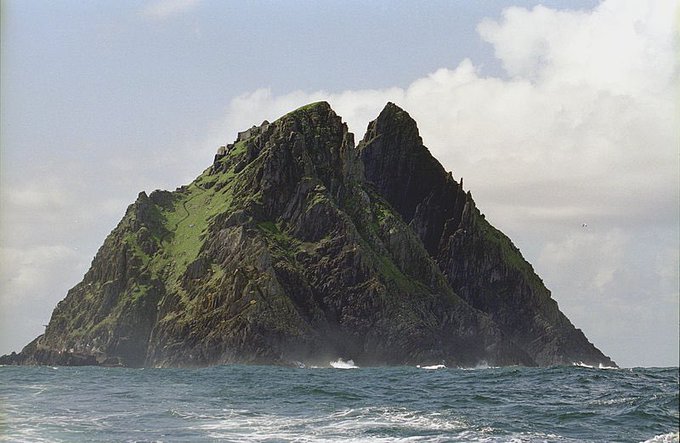
Needs reminders to
wear pants when getting the mail:
that’s America.
Irony: we must
close down the world while, outside,
Nature opens up.
My wife cuts my hair
in our driveway, shorn locks stirred
like leaves in the breeze.
In a pandemic,
students still wrestle their thoughts
into lines of verse.
#NationalPoetryMonth
Apparently we
have the freedom to be as
selfish as we want.
We’re babysitters,
waiting for parents to say
we can all go home.
Scared of the virus
but saved by soap and water:
It’s the little things.
Sleep is elusive,
a pot of gold at the end
of a dark rainbow.
Do I read that book
or write my book? That is the
writer’s conundrum.
Health in ‘rona time:
working very hard not to
eat my weight in snacks.
If only we could
open hearts as easily
as we open states.
States are like windows—
you don’t throw them open when
it’s storming outside.
All our restaurants
are a bad love story: wide
open but empty.
I miss my students,
who are more than faces and
voices on a screen.
Money is like wind:
blowing in, then vanishing.
People are your rock.
My dog takes me on
a walk, a ten-pound mass of
hair and joy and will.
Fixing a story
is like hanging a picture:
one nudge and it’s true.
Shopping for masks like
fitting glass slippers on feet
to find my true love.
The great irony:
the most gorgeous spring I’ve seen
in corona-time.
Normal is a bird
flying south for the winter,
its return unknown.
Want normal back?
Well, normal is as normal does.
Think Tom Hanks said that.


